SIZING & MEASURING
Good fit starts with good measurements.
Every piece begins with the body it is built for. Accurate measurements help ensure the finished piece fits correctly, moves as intended, and performs the way it should. Use this guide to take and record your measurements carefully.
Each product page will tell you exactly which measurements are required for that item. Use this page as your reference for how to take them.
BEFORE YOU START
Measure carefully. Build from accurate information.
Take all measurements directly from your body using a flexible tailor’s tape. Keep the tape flat against the body and level where appropriate. Measurements should be snug, but not tight enough to compress the body.
- Use a flexible tailor’s measuring tape.
- Measure directly on the body or over a very thin base layer.
- Stand naturally and do not hold your breath or change your posture.
- Keep the measuring tape level where indicated.
- Do not add extra room or a comfort allowance.
- Do not size up or size down unless the product page specifically instructs you to.
- Record each measurement carefully and double-check it before submitting your order.
MEASUREMENT REFERENCE
Use the diagrams as your guide.
Follow the numbered reference lines shown below when taking measurements. Your product page will identify which measurements are required for the item you are ordering.
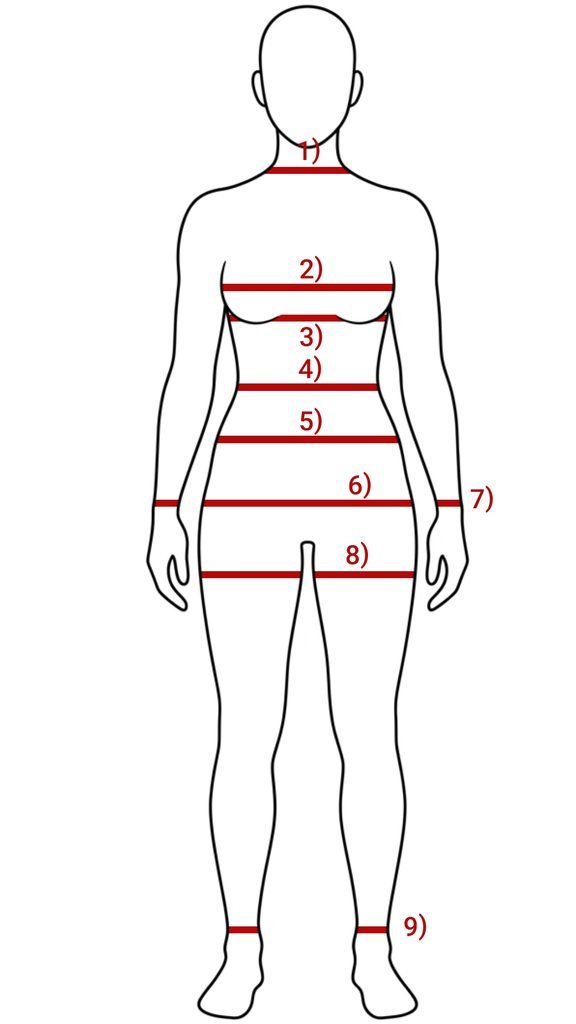
Figure 1 — Female Front Reference
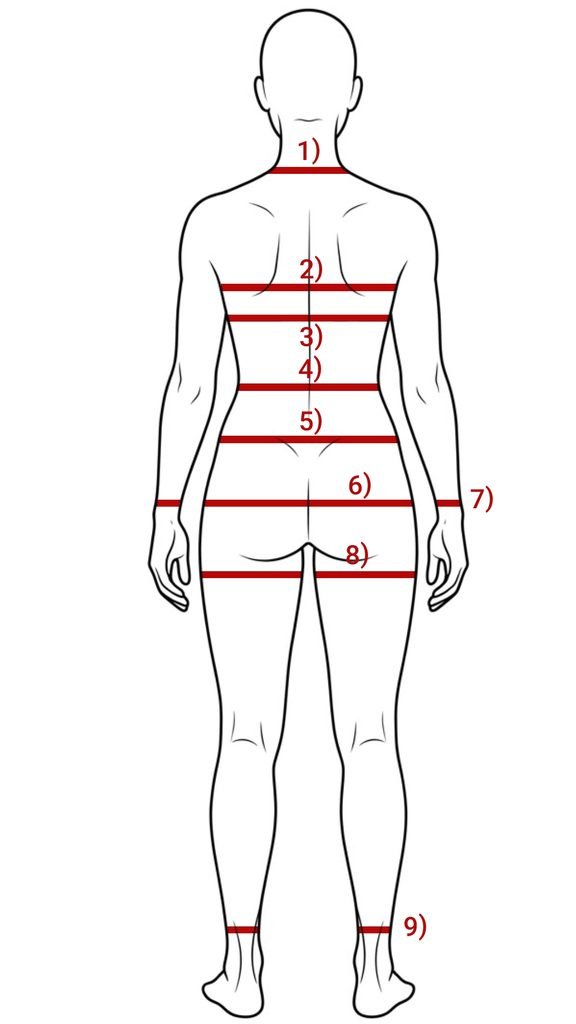
Figure 2 — Female Back Reference
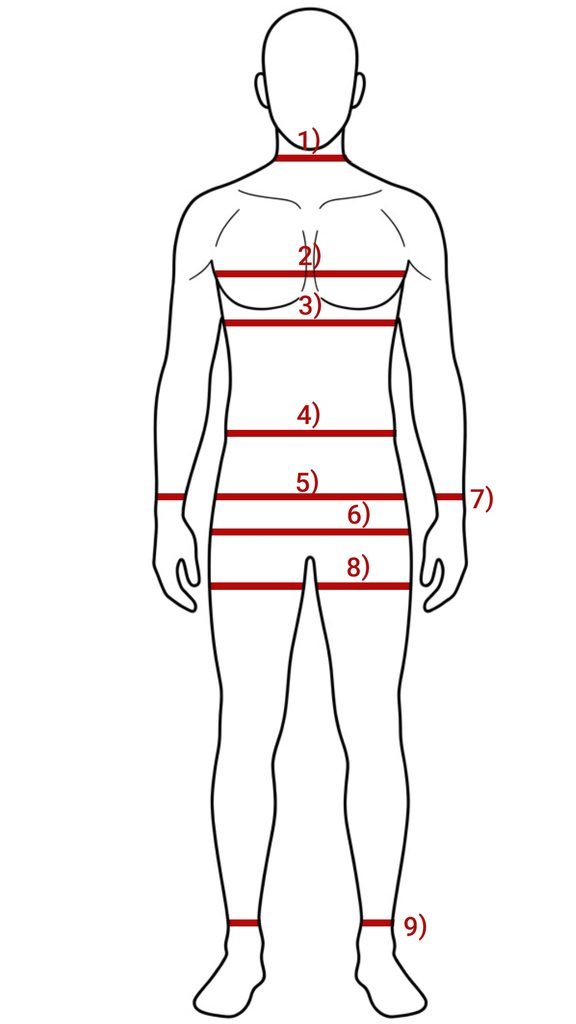
Figure 3 — Male Front Reference
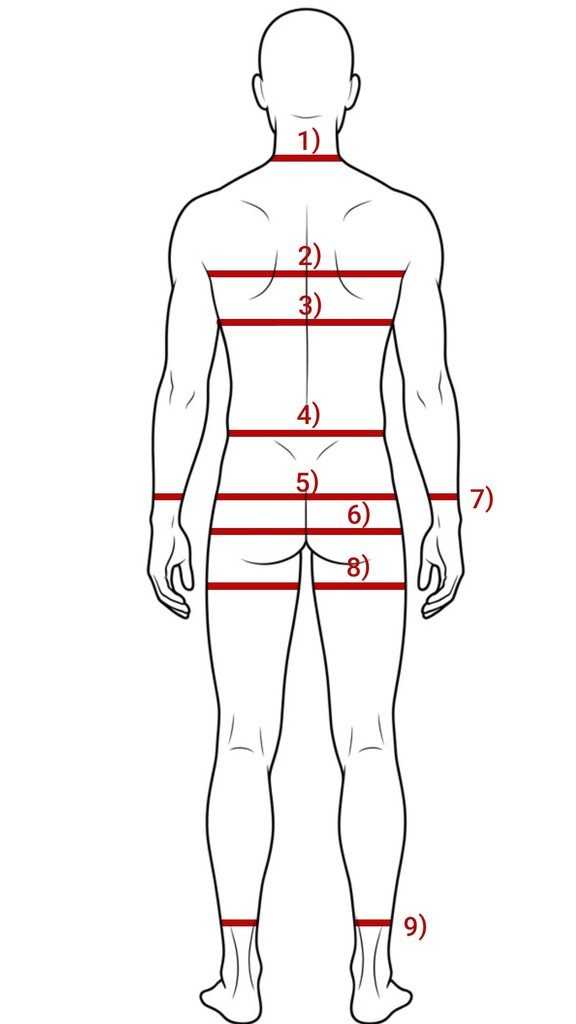
Figure 4 — Male Back Reference
MEASUREMENT GUIDE
Take the measurements your product page requests.
These are the standard measurement terms used throughout Royal Star Leather. Follow the product page for the measurements required for your particular item.
1) Neck Circumference
Wrap the tape around the base of your neck, above the collarbones and below the Adam’s apple. Keep the tape level and comfortably snug.
2) Chest / Bust Circumference
Measure around the fullest part of your chest or bust. Keep the tape parallel to the floor and make sure it lies flat against the body.
3) Underbust Circumference
Measure directly beneath the bust or chest. Keep the tape level around the body and snug without compressing.
4) Natural Waist Circumference
Measure around the narrowest part of your torso, typically between the bottom of the rib cage and the top of the hips.
5) High Hip Circumference
Measure around the upper hip area, below the natural waist and above the fullest part of the hips. Keep the tape level around the body.
6) Full Hip Circumference
Measure around the fullest part of your hips and seat. Keep the measuring tape level all the way around the body.
7) Wrist Circumference
Measure around your wrist just above the wrist bones. Keep the tape snug against the skin without pulling it tight.
8) Thigh Circumference
Measure around the fullest part of your upper thigh unless the product page specifies a different measurement location.
9) Ankle Circumference
Measure around your ankle just above the ankle bones. Keep the tape level and comfortably snug.
IMPORTANT NOTES
A better measurement makes a better piece.
If a measurement is unclear or something about your fit requires additional explanation, contact Royal Star Leather before submitting your order rather than guessing.
- Follow the measurement requirements listed on your specific product page.
- Do not substitute clothing sizes for body measurements.
- If your body is asymmetrical or you have a fit concern relevant to the piece, include that information with your order.
- Double-check every measurement before submitting it.
BUILT AROUND THE WEARER
Fit starts before the first cut is made.
Good fit begins with good information. The measurements you provide become part of the design process that shapes your finished piece.